Xiaoya Yuan is an experienced former Senior Health Educator at the Charles B. Wang Community Health Center where she played a large role in writing a variety of educational articles for the Health Center’s patients and community members.
A Parent’s Guide to Healthy Screen Time for Kids
Clinically reviewed by Loretta Au, MD

In today’s digital age, screens are a part of everyday life for both adults and children. From schoolwork to communication and entertainment, children are spending a significant portion of their day on screens. As caregivers, it is important to help your child find balance. This article explores how your family can develop healthy screen habits while promoting other essential activities like physical recreation, family bonding, and in-person socializing.
Why Screen Time Matters
Screen time generally refers to activities that involve the screen of a digital device, such as working on an iPad, watching videos on cell phones, or using social media.1 The time a child spends on screens matters because it can affect many areas of their growth and development. Technology can be a helpful learning tool; when poorly managed, however, it can impact a child’s physical health, emotional well-being, and social skills.
Physical Health
Excessive screen time can directly cause children to experience eye strain, headaches, or neck and shoulder discomfort.2 When kids continuously use digital devices, they also tend to have less time moving their bodies and may spend more time indoors. Overall physical inactivity can affect their energy and long-term health.3 Spending too much time on “near” activities makes it easier for children to develop nearsightedness (myopia) in the future.4 These activities include computer games, internet use, and reading e-books.
Screen use, especially in the evening, also leads to later bedtimes and reduced quantity of sleep. Additionally, the light from screens and the excitement of entertaining content can further affect the quality of sleep, making it harder for children to relax while asleep.5 Over time, poor sleep hygiene may increase the risk for various health problems, including obesity, type 2 diabetes, and injuries.6
Mental and Emotional Well-Being
While screen use can provide positive educational and informational benefits, studies have identified a correlation between high screen time and adverse mental health outcomes. Some children show “emotional reactivity, aggression, and externalizing behaviors” after long periods on screens. Research also found that computer use and video gaming, specifically, are associated with higher severity of anxiety and depressive symptoms.7 Furthermore, screen-related sleep disruption may worsen the case, causing emotional sensitivity and other mood disorders.8
Learning and Social Development
Young children’s brains are rapidly growing. Real-world experiences like talking, playing, and interacting with caregivers and peers help build language, attention, problem-solving, and social skills. As these activities are being replaced by increasing screen time, it may limit opportunities, especially for young children, to practice important developmental skills.
For older children and teens, social media plays a growing role in social development. While online platforms can support connection and self-expression, they may also contribute to stress and anxiety. Misinformation, fear of missing out, or cyberbullying can affect children’s and teens’ confidence and social skills.9 These challenges may be more pronounced when social media use replaces in-person relationships, sleep, or offline activities that support healthy development.
Why Are Screens Attractive to Children?
Screens are especially attractive to children because they align with how the developing brain learns, plays, and seeks connection. This attraction is not a sign of weak willpower or poor parenting; instead, it reflects how digital media is designed and how the content is targeting the specific audience of children and adolescents.
Content Design
Children’s brains are still developing skills like impulse control and self-regulation, so they may be especially drawn to content that is highly stimulating and fast-paced. Many digital games, videos, and apps are intentionally designed to keep children engaged and entertained. Bright colors, fast movement, and sound effects stimulate the brain and create excitement. Features such as autoplay, unpredictable incentives, and endless scrolling also remove natural stopping cues, making it harder for children to get off the screen.
Instant Gratification
Tap a button or swipe the touch screen, something happens right away. With little effort, digital devices provide immediate responses. Compared to activities like reading and sports that take more time and practice, a screen’s instant feedback can offer quick satisfaction and a sense of accomplishment.
Social Connection and Identity
Feeling connected to others can be an important part of emotional well-being during childhood and adolescence. Messaging, social media, and online games make it easy to feel connected and see what others are doing in real time. In addition to the social meanings, screens also provide older children and teens with a space to explore and express their identity through profiles, avatars, posts, and shared content. Peer feedback, such as followers, likes, and comments, reinforces this behavior, making screen use especially appealing.
Tips for Building Healthy Screen Time Habits at Home
Healthy screen habits are more about balance and consistency than strict rules. Clear routines with small, realistic steps can help families manage screen time, allowing children to use digital devices in ways that support their health and development.
Follow Screen Time Guidelines
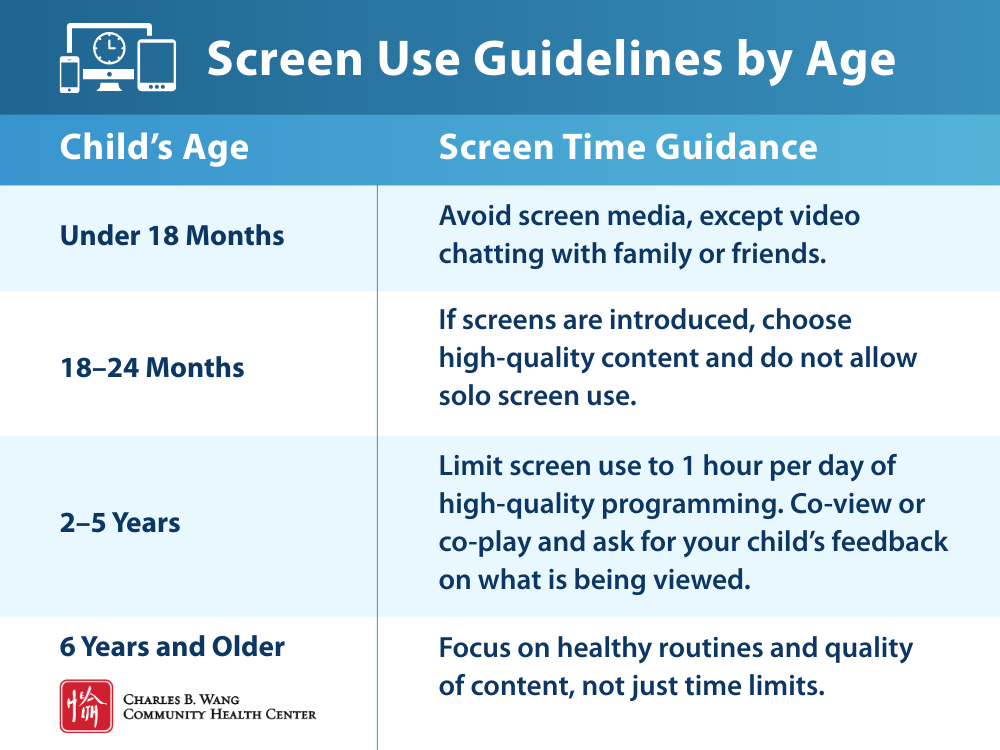
The American Academy of Pediatrics (AAP) offers guidance to help families build healthy screen use habits. These recommendations focus not only on how much time children spend on screens, but also on how screens are used and how they fit into daily routines.10,11
Create Routines
Establishing regular routines provides structure and helps your child know what to do, when and how often to do daily needed chores and tasks. Making screen time a part of these routines allows children to balance media use with sleep, physical activity, and family interaction. Below are some tips for creating routines as a family:
- Set consistent time and space for screens and give advance notice when screens need to be turned off.
- Avoid screen use during meals, family conversations, and bedtime to protect connection and sleep.
- Support these routines by modeling healthy habits. For example, putting devices aside during family time can show your kids that screens are just one part of daily life.
- Fill daily routines with engaging offline activities, such as outdoor play, creative projects, or even casual chats.
- During school breaks and weekends, look for simple activities your family can enjoy together, like running errands together, spending time with relatives or friends, or attending community events.
- Invite a friend or classmate to make these activities more engaging for your child.
Over time, clear routines and shared modeling make it easier for children to enjoy screens responsibly while staying active, connected, and supported.
Choose High-Quality Content
What children watch or play matters as much as how long they spend on screens. Choose age-appropriate, educational, and non-violent media that encourages learning, creativity, or positive social skills. Interactive or hands-on digital activities can also be more beneficial than passive viewing. Whenever possible, watch or play together and talk about what your child is seeing. You may suggest high-quality content, but it is also important for your child, especially as they grow older, to participate in managing their own screen time.12 These activities help them understand the content better and apply it to real-life situations.
Keep the Conversation Going
It is not always easy to build healthy screen habits as a family. Communication is key. Open, honest conversations help turn screen time from a source of conflict into an opportunity for connection. Talking with children about how, when, and why screens are used helps them feel heard and respected, rather than controlled.
Transitions away from screens can be especially challenging without communication. Talking before a screen time session helps prevent misunderstandings. For example, clearly explaining how long screen time will last or what activity comes next sets expectations for both you and your child. Checking in as the end approaches by giving reminders helps children emotionally prepare for a stop. When screen time ends at a natural break and children are given time to save their work, transitions may come more easily.12
Part of healthy communication is creating simple, clear rules together, with consequences when rules are not followed. These rules work best when they are negotiated and agreed upon by both you and your child.12 When expectations and consequences are discussed ahead of time, children are less likely to feel surprised or punished, and more likely to learn to respect rules.
As children grow up, their screen use and needs will change. Keeping communication open and revisiting family agreements together allows families to adjust expectations while maintaining trust and consistency.
When to Talk to a Healthcare Provider
Most children can benefit from screens when use is balanced and age-appropriate, but sometimes screen habits may signal the need for professional guidance. Parents should consider speaking with a pediatrician or healthcare provider if they notice:
- Sleep Problems
- Behavior or Mood Changes
- Academic and Attention Difficulties
- Excessive or Compulsive Use
- Safety or Privacy Concerns
Healthcare providers can help families assess screen habits, suggest limits, and provide strategies for building healthy routines tailored to a child’s age, developmental stage, and individual needs. Early guidance can support healthy digital habits for the whole family.
At our Manhattan and Queens locations, the Charles B. Wang Community Health Center provides high-quality pediatric care for patients up to 21 years. We focus on understanding each child’s unique needs and addressing families’ questions and concerns. By partnering with patients and their families, our pediatricians help guide healthy decisions and support lifelong well-being.
FAQs
1. Are screens safe at bedtime?
The light and stimulation from TVs, tablets, or phones can make it harder for children to fall asleep, stay asleep, and get restful sleep. To support healthy sleep, turn off screens at least one hour before bedtime and keep devices out of bedrooms by setting up a family charging station in a common area outside of the bedroom.
2. At what age should children be allowed to use social media?
Based on current research on the benefits and risks of early social media use and social media platform policies, experts generally recommend waiting until at least age 13 before allowing children to use social media platforms such as Instagram and TikTok.13 Even then, readiness varies from child to child. Considering your child’s individual needs and circumstances can help families decide when and how to introduce a specific platform. If deciding to introduce social media, parents can also set up teen accounts to protect privacy and safety.
3. Can screens ever be beneficial for my child?
Yes. When used intentionally, high-quality digital media can support learning, creativity, and social connection. The keys to a positive digital experience is balance, content, and communication.11
Sources
- https://medlineplus.gov/ency/patientinstructions/000355.htm
- http://my.clevelandclinic.org/health/diseases/24802-computer-vision-syndrome
- https://www.cdc.gov/physical-activity/php/about/index.html
- https://www.aao.org/eye-health/tips-prevention/screen-use-kids
- https://pmc.ncbi.nlm.nih.gov/articles/PMC10029815/
- https://www.cdc.gov/physical-activity-education/staying-healthy/sleep.html
- https://pmc.ncbi.nlm.nih.gov/articles/PMC10353947/
- https://pmc.ncbi.nlm.nih.gov/articles/PMC10852174/
- https://www.mayoclinic.org/healthy-lifestyle/tween-and-teen-health/in-depth/teens-and-social-media-use/art-20474437
- https://www.aap.org/en/patient-care/media-and-children/center-of-excellence-on-social-media-and-youth-mental-health/qa-portal/qa-portal-library/qa-portal-library-questions/screen-time-guidelines/
- https://www.healthychildren.org/English/family-life/Media/Pages/healthy-digital-media-use-habits-for-babies-toddlers-preschoolers.aspx
- https://raisingchildren.net.au/school-age/media-technology/screen-time-healthy-screen-use/managing-screen-time-3-11-years
- https://www.aap.org/en/patient-care/media-and-children/center-of-excellence-on-social-media-and-youth-mental-health/qa-portal/qa-portal-library/qa-portal-library-questions/age-to-introduce-social-media/
Related Articles




What Is A Well-Woman Exam (or Annual Gynecology Visit)?
Clinically reviewed by Pearl Tung, DNP