
Joy Nieh is a Former Health Educator at the Charles B. Wang Community Health Center where she empowered the youth through health education as part of the Teen Resource Center team. She believes health education is essential to not only a healthy but purposeful and fulfilled life.
Understanding Common Birth Control Methods: The Differences Between IUD vs Pill
Clinically reviewed by Pearl Tung, DNP
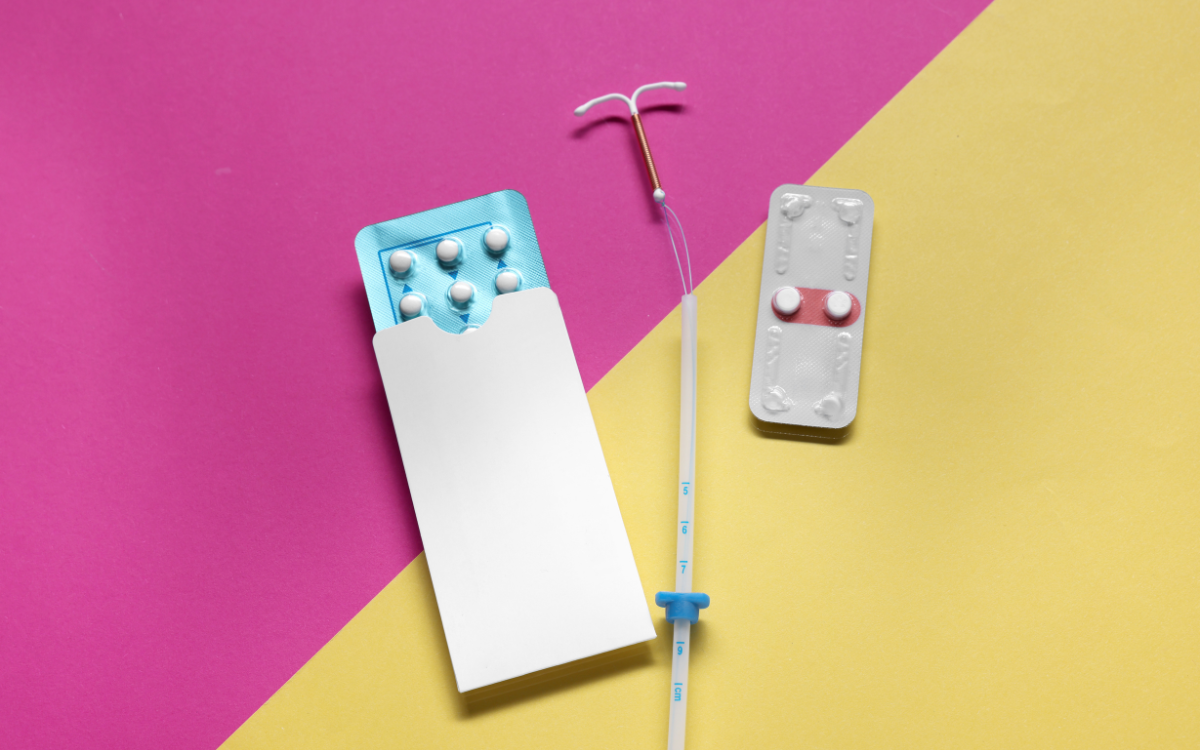
When choosing a birth control method, you might be considering your lifestyle, personal preferences, and what works best for your body. A provider can walk you through your health concerns, lifestyle, and values to determine the best birth control for you. Ultimately, the best form of birth control will be the method that works best for you.
Considering the Intrauterine Device (IUD) or the Pill
An IUD, or intrauterine device, is like the name suggests, a birth control method a healthcare provider places in the uterus. It is a small, T-shaped device that makes it harder for sperm to move, preventing sperm from fertilizing an egg. In hormonal IUDs, progestin is used to thicken the cervical mucus, making it difficult for sperm to reach the uterus.1 For nonhormonal IUDs, copper ions are released into the body, which are toxic to sperm.2
The birth control pill, also known as "the pill", is an oral medication one takes daily to prevent pregnancy. It works by releasing specific hormones into the body— either progestin or a combination of progestin and estrogen.3 Progestin-only pills help prevent pregnancy by thickening the cervical mucus, making it difficult for sperm to enter the uterus.4 Combination pills (which contain progestin and estrogen) help prevent pregnancy by stopping ovulation.5
The intrauterine device and the pill are two common birth control methods. Both are highly effective forms of birth control. Learn more about these two options below.
What is an Intrauterine Device?
An IUD is a small T-shaped device that is inserted into the uterus by a medical professional. An IUD is a long-lasting reversible contraceptive.
IUDs are available as hormonal contraception or non-hormonal contraception. It is a very effective birth control method, preventing pregnancy over 99% of the time. It is also a very private birth control method. The IUD is not externally visible and does not require a person to take any particular action to use it. The length of time an IUD is effective depends on the brand you decide to use. In general, it remains effective for 3–12 years, and after insertion does not require maintenance. An IUD is a reversible form of contraception. While it will require a removal procedure by a medical professional, fertility will resume shortly after the IUD is removed.6
There are two main types of IUDs— copper IUDs and hormonal IUDs.3
Copper IUD
Copper IUDs are a nonhormonal contraceptive method. Copper IUDs do not release hormones into the body. They work by releasing copper ions which are toxic to sperm.2 There is only one brand available for the copper IUD, Paraguard. This IUD remains effective up to 12 years.6
A person using a copper IUD may have heavier periods and more cramps during their period. This may improve after a few months, after your body adjusts to the IUD.6
Individuals who are interested in an IUD and who would like to track and manage their periods may prefer using a copper IUD.
Hormonal IUD
Hormonal IUDs work by releasing the hormone progestin. Progestin thickens the cervical mucus and makes it harder for sperm to reach the uterus.1 There are four brands of hormonal IUDs: Skyla, Kyleena, Mirena, and Liletta. Skyla remains effective for up to 3 years, Kyleena up to 5 years; Mirena and Liletta remain effective up to 8 years.6
During the first few months after a hormonal IUD is placed, a person may experience heavy periods, spotting in between periods, or irregular periods. However, over time, it is common to have lighter periods, or your periods may stop altogether.6
Individuals who are interested in an IUD and who would like to minimize heavy or painful periods may prefer a hormonal IUD.
How to Access an IUD
If you would like a low maintenance and private birth control method, an IUD may be the right choice for you.
If you are interested in using an IUD, the first step is to speak with your provider. An IUD is inserted, then eventually removed or replaced by a provider. When inserting an IUD, your provider will first conduct a pelvic exam to measure the size, shape and position of your ovaries and uterus. Then, your provider will use a device called a speculum to hold the vagina open. An antiseptic solution will then be used to clean the vagina and cervix. Afterwards, the IUD will be inserted through the cervix into the uterus. You will likely feel cramping when the IUD is inserted.7
If you are interested in using an IUD, reach out to your OBGYN provider. They will be able to provide details on the cost of using an IUD. At the Charles B. Wang Community Health Center (CBWCHC), it may be covered by insurance or we can provide a sliding fee discount for our OBGYN services for eligible patients. This includes contraceptive counseling, IUD placement, and IUD removal.
What is the Pill?
The birth control pill, otherwise known as the pill or oral contraception, is an oral medication one takes daily to prevent pregnancy. It works by releasing hormones into the body.
The pill is a form of hormonal contraception. With proper use, the pill prevents pregnancy over 93% of the time. While the pill is not a completely private method (a person will need to take a pill daily), it is not externally visible or noticeable. The person taking the pill will have control over when and for how long they use contraception. This method will remain effective as long as they continue to take the pill consistently and correctly. That is, taking the pill every day, at the same time. It is also easily reversible. Once a person stops taking the pill, their fertility will resume shortly after.
There are two main types of birth control pills—the combination pill and the mini-pill.3
Combination Pills
The combination pill contains the hormones progestin and estrogen. The combination pill is the more commonly used type of birth control pill. This pill works by stopping ovulation from happening and thus prevents pregnancy. For the combination pill, you need to take one pill a day to prevent pregnancy. Most come in 28-day packs, with 21 hormone pills and 7 placebos to help you start your next pack on time.5
Common side effects of the combination pill include: nausea, irregular bleeding, headaches and sore breasts. These are usually temporary as your body gets used to the pill. Since the combination pill pack contains placebo pills, a person using this hormonal method may experience monthly bleeding. Individuals who are interested in the pill and would like to track and manage their monthly bleeding may prefer the combination pill.5
Mini Pill or Progestin-Only Pill
The mini pill or progestin-only pill only contains the hormone progestin. It comes in packs of 28, with each pill containing hormones. The pill works by thickening the cervical mucus, making it harder for the sperm to meet the egg.4
The mini-pill does not contain estrogen, so one may experience different or fewer side effects compared to other hormonal contraceptive options. Like other hormonal methods, the mini pill may have side effects such as nausea, headaches, acne and sore breasts.4
It can affect your period in different ways. You may have more frequent periods, lighter periods, or your periods may stop altogether.8 Individuals who are interested in the pill and would like to minimize heavy or painful periods may prefer using the mini-pill.
How to Access the Pill
Both the combination and mini pill may be available at the pharmacy. One mini-pill brand, Opill, is available over the counter. This means you can buy it without a prescription. All other brands of mini-pills or combination pills will require a prescription. However, in some states like New York State, a pharmacist can prescribe and dispense the pill. This means a person can access the pill at the pharmacy even if they do not have a Primary Care Provider.
If you have insurance, most likely you will be covered for the pill. If you are underinsured or without insurance, CBWCHC can help. We provide a sliding fee discount for our services, including contraceptive counseling and prescriptions.
Comparison: IUD vs. Pill
When considering which birth control to use, it can be helpful to compare important factors such as effectiveness, side effects and benefits.

Choosing What is Right for You
When considering birth control, it is important to find a method that works best for you. Some questions you may want to consider may include: What works best for your lifestyle and your body? Which birth control method do you prefer personally? Every person is different; what works for you may not work for other people, and that’s okay.
In addition, when considering birth control methods, it is important to take into account cultural considerations. Asian individuals, especially if raised in a traditional household, may be unaware of birth control methods, due to stigma in regards to birth control and reproductive health.9 This can cause people to be reluctant to seek care. However, reproductive and sexual health is a normal and important aspect of your overall health and well-being.
Another important cultural factor to consider is language barriers. If you have limited English proficiency, there may be a language barrier with your provider. If your provider is unable to speak your language, it can be hard to ask for guidance on which birth control works best for you and your body.
At CBWCHC, we can help. Our OBGYN providers are highly skilled, multilingual, and compassionate, providing personalized guidance for every patient. They are sensitive to cultural differences, creating a welcoming environment to share any concerns you may have for birth control or reproductive health. They are located in multiple locations in Flushing, Queens and Chinatown, Manhattan.
Make an appointment with our OBGYN team today.
In addition, if you are underinsured or without insurance, and would like to access birth control, we can help. We provide a sliding fee discount for our OBGYN services. In addition, if you would like to sign up for insurance, we have multilingual insurance counselors to guide you every step of the way.
FAQs
1. Does the IUD hurt when it’s inserted?
The experience varies from person to person. Everyone’s body is different and the way they experience pain is different. Patients may experience pain from mild discomfort to severe cramps during and after the procedure.10 You may feel pressure and cramping as the IUD is placed through the cervix into the uterus.11 The strongest cramps should subside in a few minutes after the IUD is placed.11
If you are concerned about the pain, you have options to choose for pain management. You may take over the counter pain medication such as ibuprofen. You can ask for a lidocaine injection around the cervix. You can also talk to your doctor about taking anxiety medications such as Ativan to help your pelvic muscles relax. Some patients find listening to their favorite music or holding the hand of a loved one relieves discomfort.10
Speak to your healthcare provider to discuss which option works best for you.
2. What happens if I miss a day of the pill?
The mini-pill must be taken at the same time every day to be effective in preventing pregnancy. If you are more than three hours late, you will need to use a backup method of birth control (such as condoms) to prevent pregnancy.4
For the combination pill, you need to take one pill a day to prevent pregnancy. You do not need to take it the same time every day. Nonetheless, it is key that you remember to take it every day.3
If you miss a day, take the pill as soon as you remember. If you are taking today’s pill and missed yesterday’s pill, take both at the same time. You are protected from pregnancy as long as you catch up on your doses within 24 hours. If you are currently taking a progestin only pill or the mini pill, use a backup birth control method for the next 48 hours.12
3. Can I stop taking the pill and switch to an IUD?
Yes. You can always change birth control methods if you find a method is not working for you. When switching from the pill to an IUD, the process depends on which IUD you would like to use.
If you’d like to switch to a copper IUD, you can have it inserted up to 5 days after you stop taking the pill. For hormonal IUDs, the process depends on which brand you’d like to switch to. For Liletta and Mirena, you can have the IUD inserted 5 days after you stop using the pill. For Kyleena and Skyla, you can have the IUD inserted 7 days before you stop the pill.13
4. Do IUDs or the pill prevent STIs?
No, the only birth control method that can prevent STIs is an internal or external condom. A person can pair condoms with any other method of birth control method including IUDs or the pill.
Sources
- https://www.bedsider.org/birth-control/iud#submenu
- https://www.uchicagomedicine.org/forefront/womens-health-articles/long-lasting-reversible-contraceptives-iuds-implants
- https://www.bedsider.org/birth-control/the_pill
- https://www.bedsider.org/birth-control/the_pill_progestin_only
- https://www.bedsider.org/birth-control/the_pill_combo
- https://www.plannedparenthood.org/learn/birth-control/iud
- https://www.nationwidechildrens.org/family-resources-education/health-wellness-and-safety-resources/helping-hands/hormonal-intrauterine-device-insertion
- https://www.nhs.uk/contraception/methods-of-contraception/progestogen-only-pill/side-effects-and-risks/
- https://www.plannedparenthood.org/planned-parenthood-orange-san-bernardino/about-us/blog/breaking-barriers-empowering-aapi-communities-in-reproductive-health-care
- https://www.cedars-sinai.org/stories-and-insights/expert-advice/iud-pain-what-you-should-know
- https://healthcare.utah.edu/healthfeed/2024/09/iud-insertion-pain-what-expect-and-how-manage-it
- https://shcc.ufl.edu/services/specialty-care/gyn/womens-health-ask-the-nurse/#missedpill
- https://www.reproductiveaccess.org/wp-content/uploads/2014/12/switching_bc.pdf
Related Articles



What Is A Well-Woman Exam (or Annual Gynecology Visit)?
Clinically reviewed by Pearl Tung, DNP